
Coffee Roasters – the Myths and Truths
- Post author:Mini & Mighty Ltd
- Post published:March 26, 2021
- Post category:coffee roasting blogs
- Post comments:0 Comments
What are the myths and truths of coffee roasting and production? Do commercial coffee roasters take less care than small batch coffee roasters? Is it easier to trace where the coffee has come from with small batch coffee roasters? Isn’t it better to use small batch coffee roasters? How do I know the farmers and their families are being treated fairly?
At Mini & Mighty, we are all about creating a coffee community. This blog has come from questions we have been asked, and questions we have seen quite often within the industry.
This information has been put together with one goal in mind, to unite the different coffee worlds of small batch coffee roasters with the commercial roaster and coffee production. A little, light information for you, the coffee consumer, to give you more of an understanding.
As commercial coffee roasting is on a larger scale, often there can be mixed reviews and information about various aspects, so we, at Mini & Mighty, wanted to clear a few things up.
Is less care taken by commercial coffee roasters?
This is most definitely a myth! Many large coffee roasters employ Q-graders who train for many years! To become certified, a Q grader has to pass 19 tests.
That’s six days of intensive tests – Three days practice and calibration and three days of testing, which includes triangulation, cupping, olfactory testing, sensory skills, organic acid matching pairs test, green grading coffee, roasted grading and sample roast ID.
The Q Program means coffee professionals have specialised skills and it’s now a well-known tool of the trade.
What is Q-grading, and why does it matter in the world of coffee roasting?
The Coffee Quality Institute (CQI) has set standards globally and is helpful to both those who sell coffee and those who buy it, as there is now an understanding shared throughout the industry, over the quality of the coffee in regards to processing.
How does commercial roasting affect the consistency and quality of the roast?
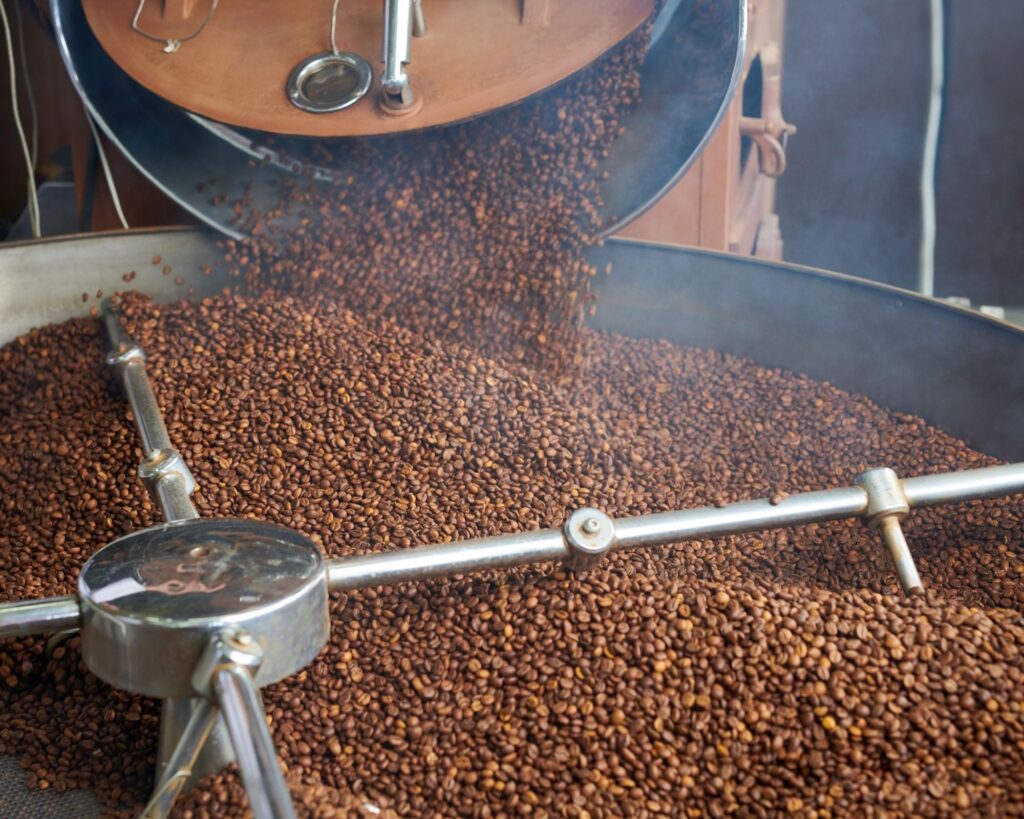
Due to highly experienced (Q-graded) people who are manning the computer controlled roasters to get the very best out of them, this keeps a consistency with the roast and the quality is high. Of course this is also determined by what the coffee customer is looking for in the final roast and from the quality of beans chosen at the start.
Isn’t there still more care taken by small batch coffee roasters though?
This is true for the most part. With small batch roasting, there’s usually more time and attention given to the roasting process when someone is carefully involved, but it is much less consistent as it can only be made in small quantities.
What about traceability?
Are commercial roasts traceable like small batch roasts?
This can be down to the coffee chosen for the roast. Commercial coffee roasters are also part of the British Retail Consortium on traceability which means they are audited regularly by the Rain Forest Alliance and Fairtrade. They will always buy their green beans through reputable green coffee traders.
Large coffee roasters will also have direct relationships with the coffee farms, some of which may have continued for 20 years or more.
If you’re ever in doubt as to where your coffee has come from, just ask!
Are farmers and their families paid a fair price for the green beans by commercial coffee roasters?
A lot of large coffee roasters will have agreements in place to pay the farmers a high price for their best quality beans as they have direct links to the farmers themselves.
We believe it’s important to get a fair price for a fair product.
The price paid to the farmers and growers is generally controlled by the green bean importers who source the beans and coffee traders. So when we picked our roaster we made sure they were buying at a fair price. At Mini & Mighty, we feel it is important that correct and ethical sourcing is always priority.
Aren’t small batch coffee roasters more likely to have a direct relationship with the growers?
This on occasion can be true, but for the most part they rely on the back story (often true) from the green coffee supplier/importer and have no direct contact with the grower themselves!
Is commercial roasting as good as small batch roasting?
This is obviously down to your chosen coffee and how it’s roasted (the process used to roast it), but generally it can be as good, or better.
Large coffee roasters offer two main ways to roast coffee:
Drum Roasting – horizontal, rotating drums that heat the beans as they “tumble” around. They are heated either by natural gas, liquefied petroleum gas (LPG), electricity or wood.
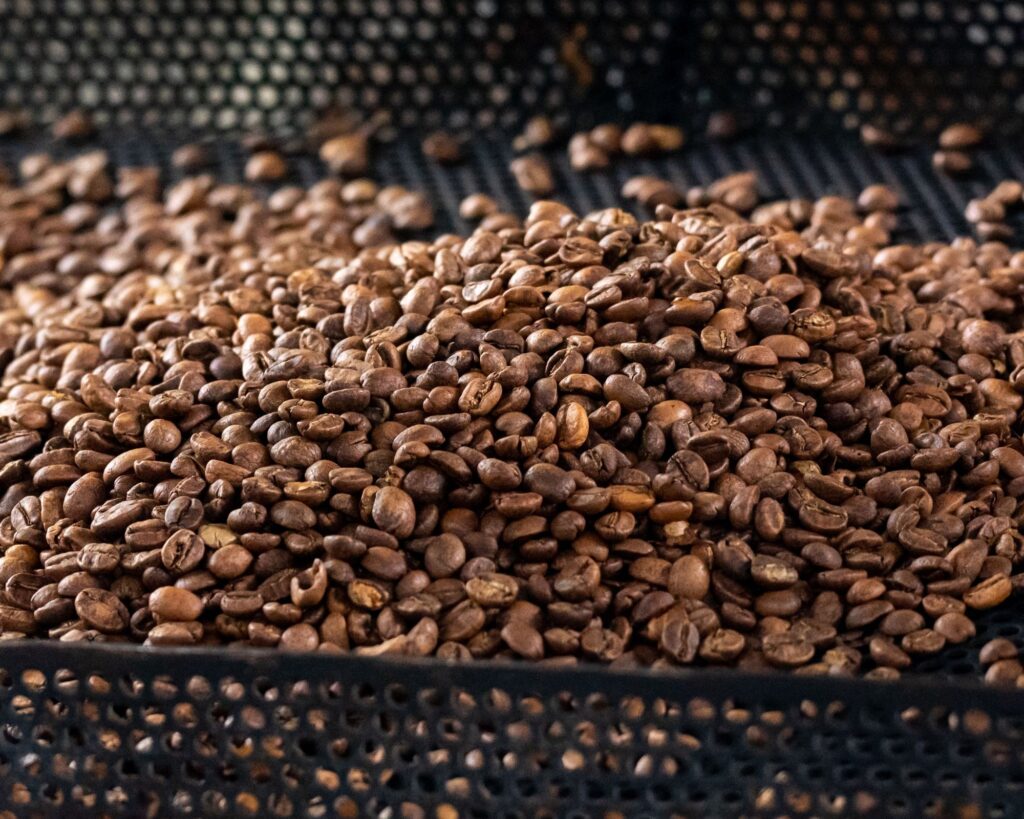
Blown Air Roasting – heated air is forced through a perforated plate under the beans – lifting the beans with the force of the air and the heat is transferred to the beans as they circulate.
Others types of coffee roasters are also used, but are less common; including packed-bed, tangential and centrifugal roasters.
Large coffee roasters will have minimal tolerance on roast colour (+ or – 4 points), so the roasting is more consistent.
Do darker roasts equal stronger coffee and more caffeine?
We don’t believe this to be true. The darker the roast can mean you taste more of the smokey and darker notes of the coffee that we have long associated with the strength of blend, but they will almost certainly have the same caffeine content if they came from the same beans to start with!
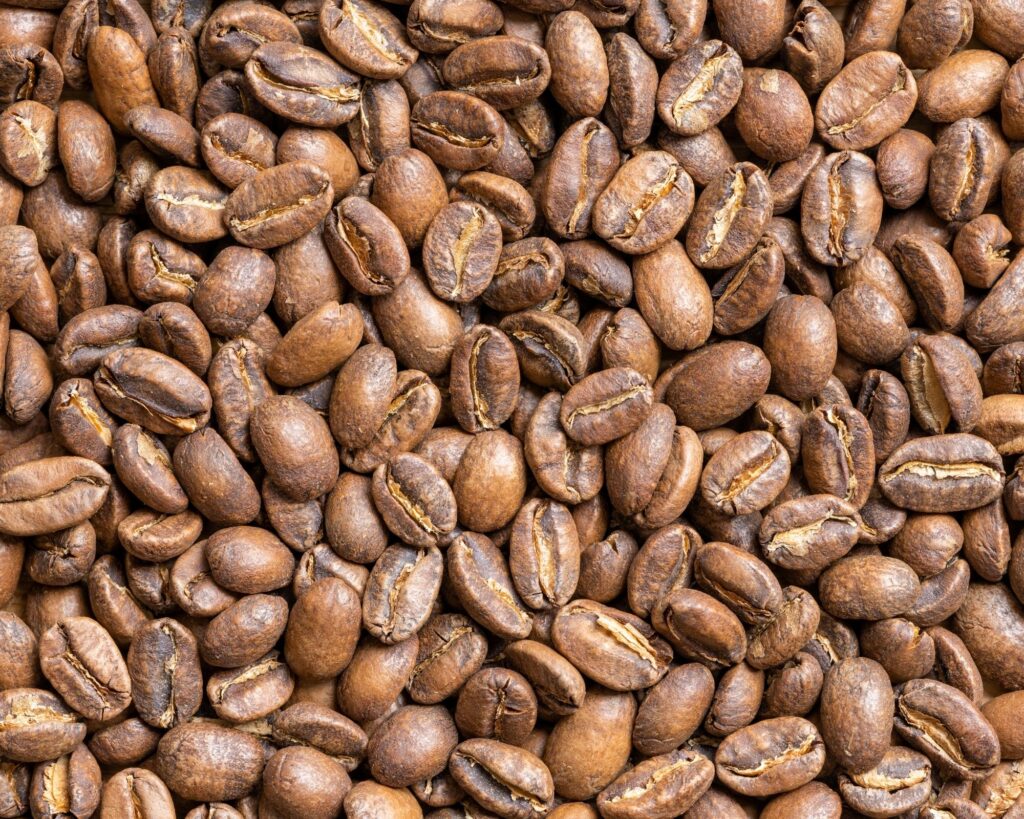
Does all coffee go stale within a few weeks?
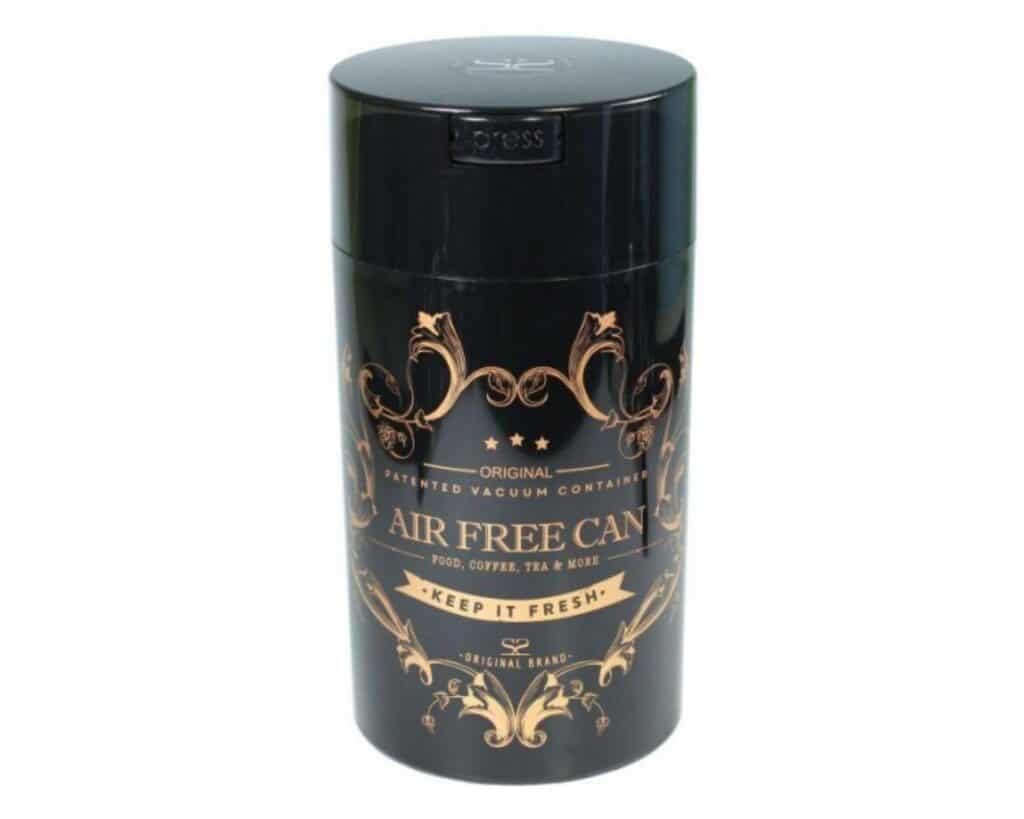
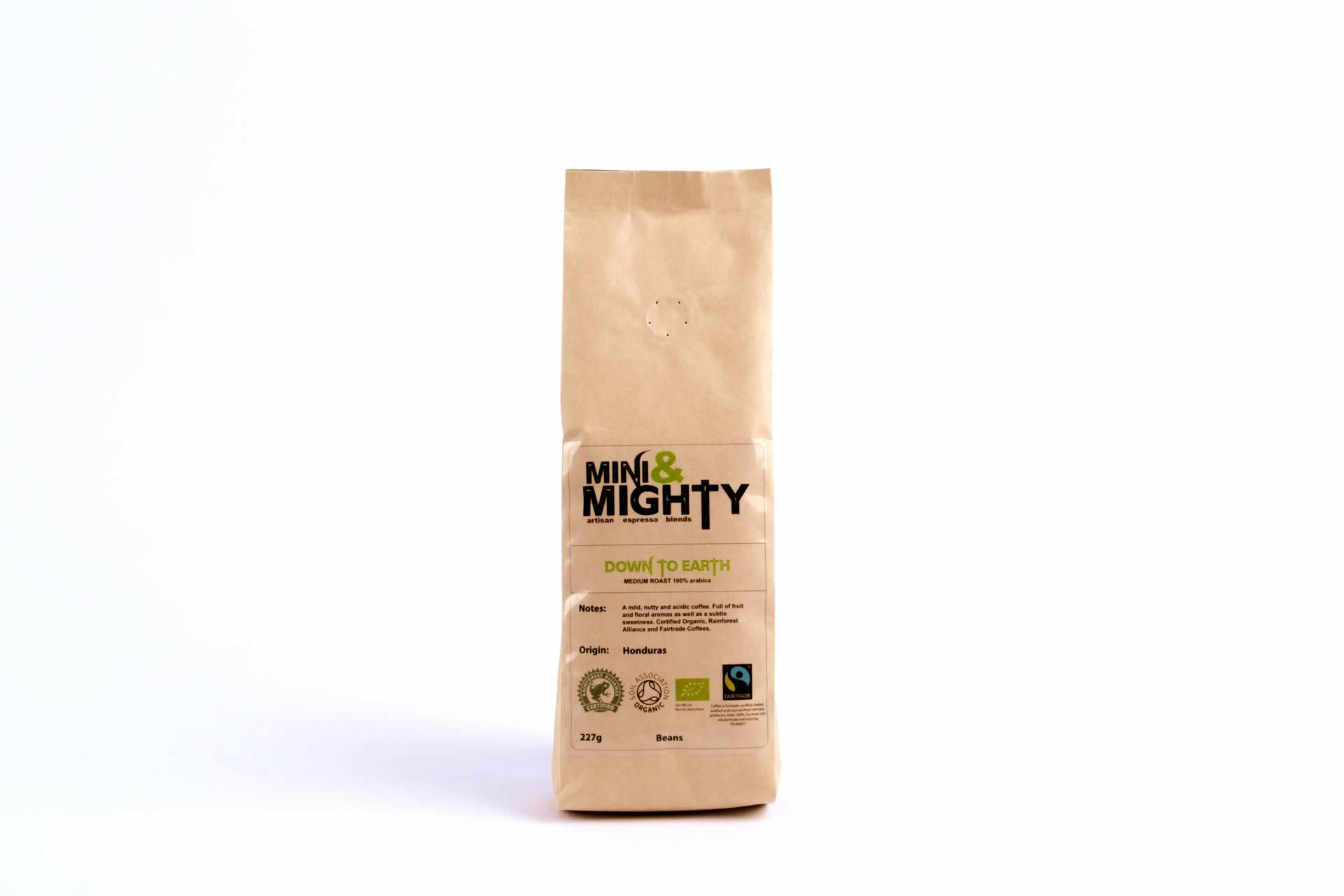
This is true if you leave coffee in direct contact with air, but many larger scale roasters can “gas Flush” their valved bags* so the coffee can stay fresh for many many months if unopened. (Ours have a 12 month shelf life, and we always recommend using them within 2-4 weeks once you open the bag, and keep it in a sealed container and also wrapped tightly in its original bag.)
* Did you also know that valved bags also play an important role in the degassing process after roasting?
Isn’t it “the fresher the better”?
Yes, there is truth to this, but the coffee takes a few days to a week to degas (around 40% in the first 24 hours), which is where the carbon dioxide is released. Timing is definitely critical to get the best from your fresh coffee.
Is it true that some large coffee brands roast low quality beans to give a maximum profit margin?
This can be true of any industry, but many small companies who use larger coffee roasters are improving their coffees as the industry is improving.
Are lighter coffee roasts more complex?
This is true of commercial roasts and small batch roasts. Although if you are willing to put the time in, the small batch coffee roasters may have the upper hand on this one.
At the same time the process can see a lot of great coffee wasted in the pursuit of the “perfect roast”. Roasting coffee is not an easy process. Like with most things in life, practice means you get better. Coffee roasting is no different. With some knowledge and practice, even home coffee roasters can produce great results.
Is it true that small batch roasting can only be done by very small coffee roasters in a shed?
This isn’t true as many large coffee roasters have small batch capabilities, often having smaller coffee roasters available from when they started out. These are then still used by hand to create small production runs and often with an experienced roaster manning the equipment.
Surely small roasters have more of a passion for their coffee?
Again, for the most part, this is very true, especially at the start as they forge an identity in what is now becoming a very crowded marketplace. Saying that, that is also true of small coffee companies like we currently are.
At Mini & Mighty we are very passionate about our coffee, and we have always made sure we are part of the grading and testing process before any of our coffees are mass produced. We also have two small coffee roasters at Mini & Mighty HQ where we do test roasts and experiment with different types of green beans.
Aren’t small runs easier to produce though?
This can be very true as very small test batches as small as 100g can be produced this way, but this does have an impact on production costs. While there are many pluses to small batch coffee roasting, it’s all about finding a balance. Small batch roasters will have a higher carbon footprint due to shipping smaller quantities.
What do we think at Mini & Mighty?
At the end of the day everyone is different. Different people will be looking for different things in regards to coffee, and the decision can only be up to you.
At Mini & Mighty, while we have the capability to do small batch coffee roasting, we are very happy with our relationship with our roaster, and feel that they are equipped and qualified to produce coffee exactly to our specifications.
If ever in doubt about any of the questions covered, always ask your coffee supplier as they are there to help and not to confuse!
Other Myths!
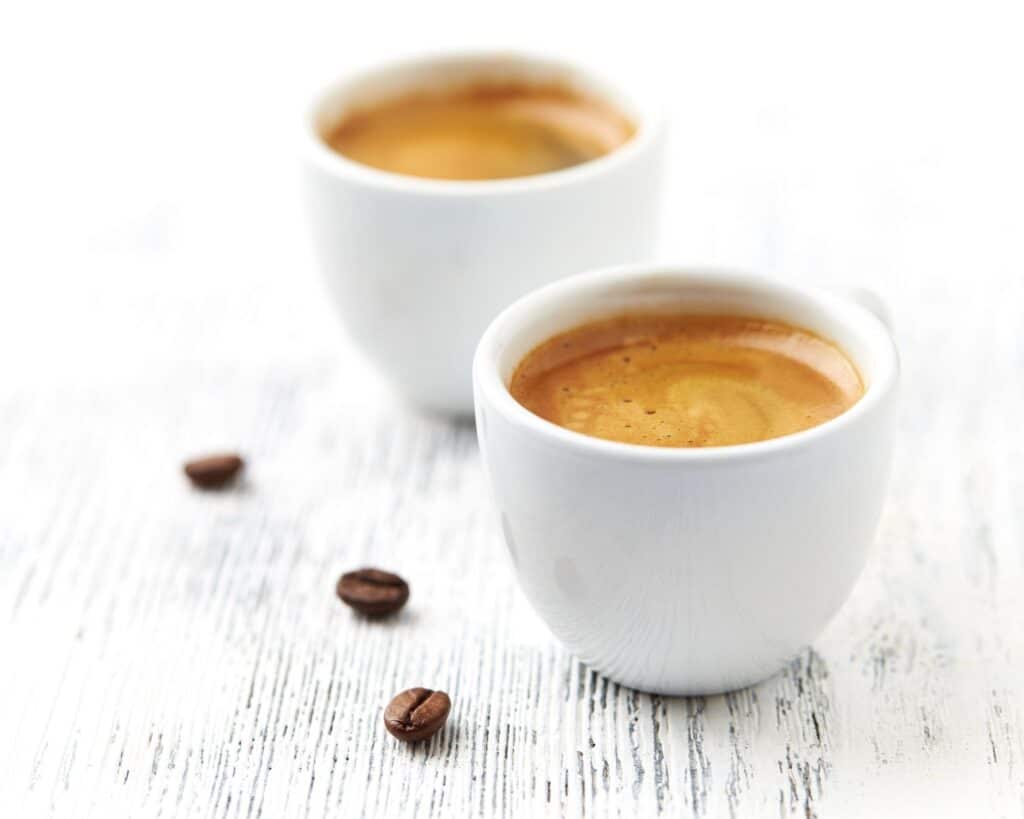
Espresso is the most caffeinated drink on the coffee menu…
This is not so, as an espresso is roughly extracted in around 30 seconds. It’s filter coffee that contains around twice the caffeine content that can give you that extra kick start in the morning. (Top tip – Cold brew could be even stronger if brewed over 10-12 hours!)

If you want to keep up to date with all that we are doing, and get tips for making great coffee at home, click here to join our Facebook Group.

Want great coffee straight to your door every month? Choose your subscription by checking out our new subscription page.