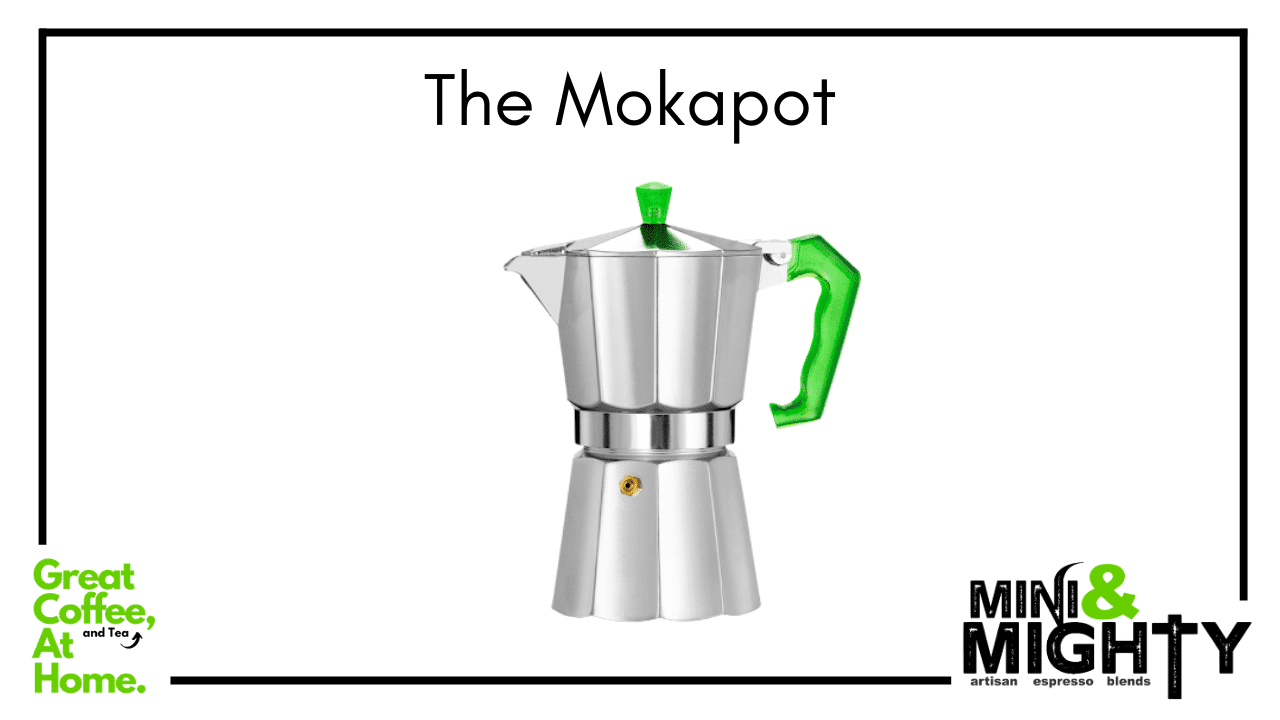
The Mokapot
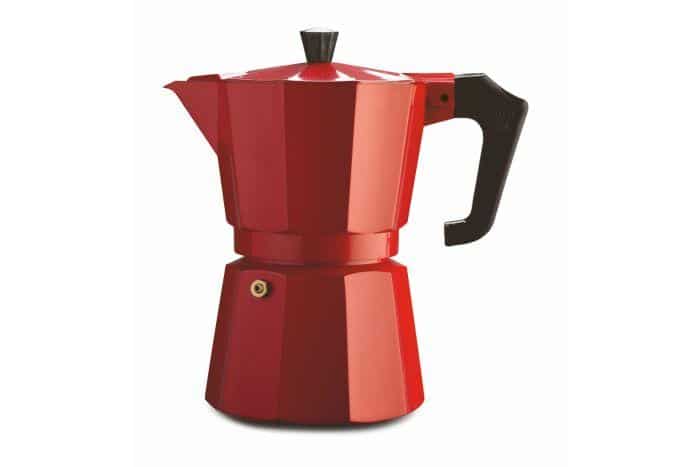
Also called a caffettiera, macchinetta or stove top, the MokaPot was invented after a man called Alfonso Bialetti returned home from France to Italy in 1918 and set up his workshop making metal household goods.
Nearby, he would often watch a group of women washing their clothes in a boiler style washing machine that had a small central pipe which drew the water up and onto the clothes. This is when he came up with the idea for the MokaPot.
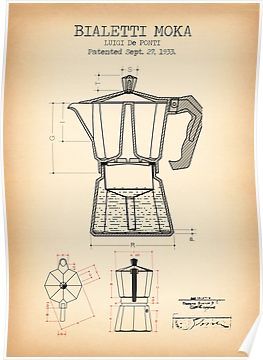
In 1933 Alfonso Bialetti transformed Luigi di Ponti’s “Moka Express” which was a stove-top, aluminum, pressure-driven coffee brewer, into what is now known as the famous MokaPot we still use today.

Historically, this was a big change from people only being able to get espressos when they were out, to being able to have one at home. It was also one of the first uses of aluminium for household appliances. The aluminum will hold a residue of the coffee, and taint over time but this just creates better flavour and more depth to the coffee.
So how does it work?
The hot water passes up through the coffee grounds, and rises up out of a tube—meaning brewed coffee does not have to pass through any other coffee filters, as the grounds stay below the final extraction. It produces an intense and concentrated brew that can be enjoyed just as much as a traditional espresso.
What you will need:
- A Mokapot
- A kettle (we love the goose neck, but any will do)
- A gas or old fashioned electric hob (not convection)
- A grinder (electric or hand is fine) – unless you buy our ready ground coffee
- Timer (Or Timer and scale in one)
Preparation:
Grind: 16-26g of medium grind
Water: Enough to reach the valve in the bottom section.
Temperature: 98-100℃ – fresh off the boil
Method:
Fill your Moka Pot to just below the valve with boiling water. Put your measured amount of ground coffee into the filter basket. Tamp gently and keep the coffee level. Place your filter basket into the bottom section of the Mokapot, then screw the spout part to the base (being careful not to burn yourself when screwing it back together). Place onto a gas or electric hob (not convection) on a medium heat until the pot starts to boil, with the lid open. As it boils you will see the coffee start to come through the central pipe. Once the coffee gets to just over half way up the top section, turn off the heat and place the pot on a cool, heat resistant surface.
What we recommend:
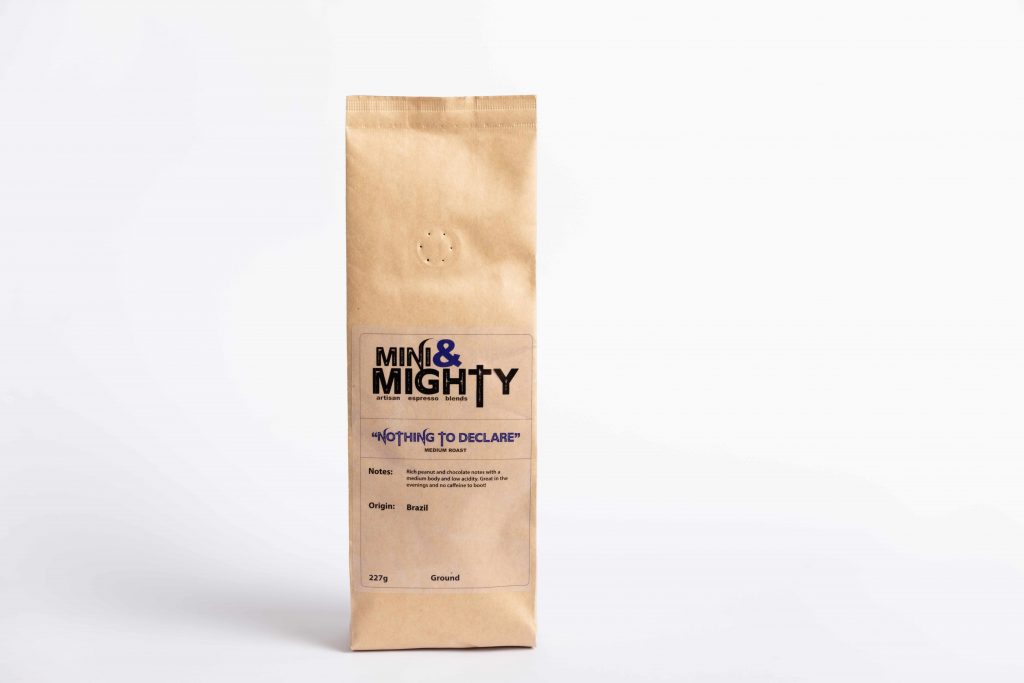
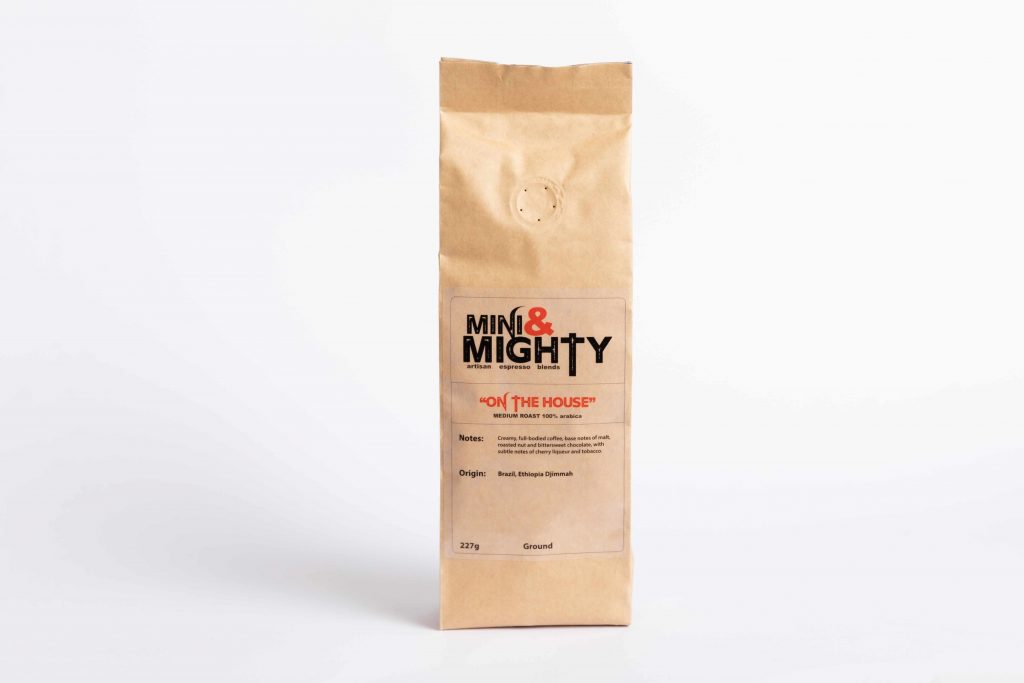
While all our blends taste great in the Mokapot, we especially like Miss Molly, On the House and Nothing to Declare.
Why do we love the Mokapot at Mini & Mighty?
Mark (Mini & Mighty MD) says: “I love my Mokapot. I’ve had mine for a lot of years now, and used it many times. I am never disappointed. I love that it’s so traditionally Italian, and also that it makes a strong brew with a bold flavour – if made correctly. Great on it’s own as an espresso, and even better with foamed milk.”
Interesting Tip:
We highly recommend running your Mokapot under the cold tap – or cool it down in some way – as soon as it’s ready. This is because the metal gets to such a high temperature, that if it is just left to cool on it’s own, it may over extract or scold the coffee which can leave it tasting bitter.
Watch our #greatcoffeeathome video here, all about making your coffee in a Mokapot